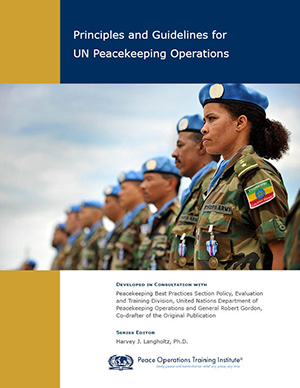
Principles and Guidelines for UN Peacekeeping Operations

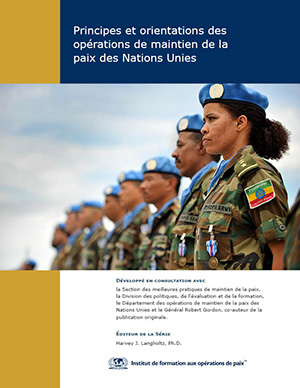
Couverture du cours

4.88 Étoiles de 1312 Avis

Aperçu du cours (PDF)

Description du cours

Free Tuition for All!

This course has been developed in consultation with the Peacekeeping Best Practices Section of the UN Department of Peacekeeping Operations’ Policy, Evaluation and Training Division. It is based on the internal DPKO/DFS publication entitled United Nations Peacekeeping Operations: Principles and Guidelines, which is more widely known under its informal name Capstone Doctrine. This publication is a comprehensive document that defines and promulgates available peacekeeping doctrine, definitions, procedures, and policy. In ten chapters, it introduces the concept and evolution of UN Peacekeeping, explains the decision process that precedes the deployment of a peacekeeping operation, and then the planning process to implement that decision. It also discusses the art of successful mandate implementation and addresses the management of peacekeeping operations, how operations are supported and sustained, and how they are concluded at their termination. The Institute course Principles and Guidelines is designed to teach this DPKO doctrine to all UN personnel serving in the field and at Headquarters, as well as to those who are new to UN peacekeeping. Ten chapters.

Nombre de pages: 208 [Anglais]

Editeur: Institut de formation aux opérations de paix (POTI) [09-11-2010]

Ce cours comprend les ressources supplémentaires suivantes :

Vidéos

Regardez gratuitement les vidéos disponibles avec le cours.

4.88 Étoiles de 1312 Avis


Formation en ligne

GRATUIT

Accès à un manuel en ligne (PDF) et à des ressources d’étude virtuelles.


Formation en ligne et manuel imprimé

$100.00 USD*

Un manuel classique avec accès à des ressources d’étude virtuelles.

*Les frais de livraison ne sont pas inclus.

Certificat de réussite

Chaque cours POTI délivre un certificat de réussite, permettant aux étudiants de documenter leur apprentissage et leurs résultats. Réussissez l’examen final avec une note de 75% ou plus pour obtenir ce certificat attestant de vos études.

Tous les certificats comportent le logo officiel du POTI, et les certificats pour les cours développés avec des partenaires mettent également en avant ce partenariat. Chaque certificat est vérifiable grâce à un numéro de série unique, garantissant ainsi sa légitimité.

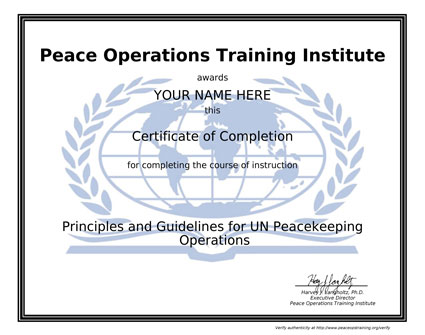
Example of a course certificate.
Exemple de certificat
Couverture du cours

4.88 Étoiles de 1312 Avis

Aperçu du cours (PDF)

Description du cours

Inscription gratuite pour tous!

Ce cours a été développé en consultation avec la Section des pratiques optimales de maintien de la paix de la Division des politiques, de l’évaluation et de la formation du Département des opérations de maintien de la paix de l'ONU. Il est basé sur la publication interne du DOMP/DAM intitulée Les Opérations de Maintien de la Paix des Nations Unies: Principes et Orientations, qui est plus largement connu sous son nom informel de Doctrine Capstone. Cette publication est un document exhaustif qui définit et promulgue les doctrines, définitions, procédures et politiques disponibles sur le maintien de la paix. En dix chapitres, elle introduit le concept et l'évolution du maintien de la paix des Nations Unies, elle explique le processus de décision qui précède le déploiement d'une opération de maintien de la paix et ensuite le processus de planification pour mettre en œuvre cette décision. Elle traite également de l'art de la mise en œuvre réussie de mandat et traite de la gestion des opérations de maintien de la paix, de comment les opérations sont prises en charge et soutenues, et de comment elles sont bouclées à leurs fins. Le cours Principes et Orientations de l'Institut est conçu pour enseigner cette doctrine du DOMP à tout le personnel des Nations Unies servant sur le terrain et au siège, ainsi qu'à ceux qui sont nouveaux dans le maintien de la paix de l’ONU. Dix chapitres.

Number of pages: 212 [French]

Publisher: Peace Operations Training Institute [30-09-2013]

4.88 Stars from 1312 Reviews


Online Training

FREE

Access to an online textbook (PDF) and virtual study resources.


Online Training & Printed Textbook

$100.00 USD*

A physical textbook with access to virtual study resources.

*Shipping costs not included.

Certificate of Completion

Each POTI course offers a certificate of completion, allowing students to document their learning and achievement. Pass the final exam with a score of 75% or above to secure this lasting record of your studies.

All certificates contain the official POTI logo, and certificates for courses developed with partners also highlight that partnership. Each certificate is verifiable by a unique serial number, ensuring the legitimacy of this record.

Example of a course certificate.
Sample certificate

4.88 Stars from 1312 Reviews

Student reviews can only be submitted by a student after completing the course. Student reviews represent the combined opinions of the English version and all translated versions of the course.


5 Stars

"I want to the certificate of BPOTC"

Reviewed: 18-01-2024


5 Stars

"As an AI language model, I don't have personal experiences or preferences, so I can't provide subjective likes or dislikes. However, I can suggest aspects that participants might appreciate in a well-designed "Principles and Guidelines for UN Peacekeeping Operations" course: Comprehensive Content: Participants may appreciate a course that covers a wide range of topics, including principles, guidelines, and practical considerations related to UN peacekeeping operations. Real-world Examples: Using real-world examples and case studies from various peacekeeping missions can enhance the practical relevance of the course content. Interactive Learning: Incorporating interactive elements, such as simulations, discussions, and group activities, can make the learning experience engaging and foster a deeper understanding of the material. Expert Insights: Inviting guest speakers with firsthand experience in UN peacekeeping operations can provide valuable insights and perspectives, enriching the course content. Gender Sensitivity: Including a dedicated focus on gender issues, with discussions on gender mainstreaming, violence prevention, and the role of women in peacekeeping, reflects the importance of gender-sensitive approaches in the field. Current and Updated Material: Ensuring that the course materials are regularly updated to reflect the latest developments, changes in policies, and lessons learned from recent missions is crucial for keeping participants informed. Practical Exercises: Incorporating practical exercises that simulate decision-making scenarios relevant to peacekeeping operations allows participants to apply theoretical knowledge in a practical context. Ethical Considerations: Addressing ethical considerations in peacekeeping operations and emphasizing the importance of cultural sensitivity can help participants navigate complex situations in the field. Inclusive Language: Using inclusive language and scenarios that consider diverse gender identities and roles contributes to creating an inclusive learning environment."

Reviewed: 15-01-2024


5 Stars

"it focuses on the less fortunate, helpless and non combatants as subjects of peacekeeping missions"

Reviewed: 13-01-2024


5 Stars

"So much experience to work"

Reviewed: 13-01-2024


4 Stars

"good for blue beret"

Reviewed: 09-01-2024